Vaccination as generational public service

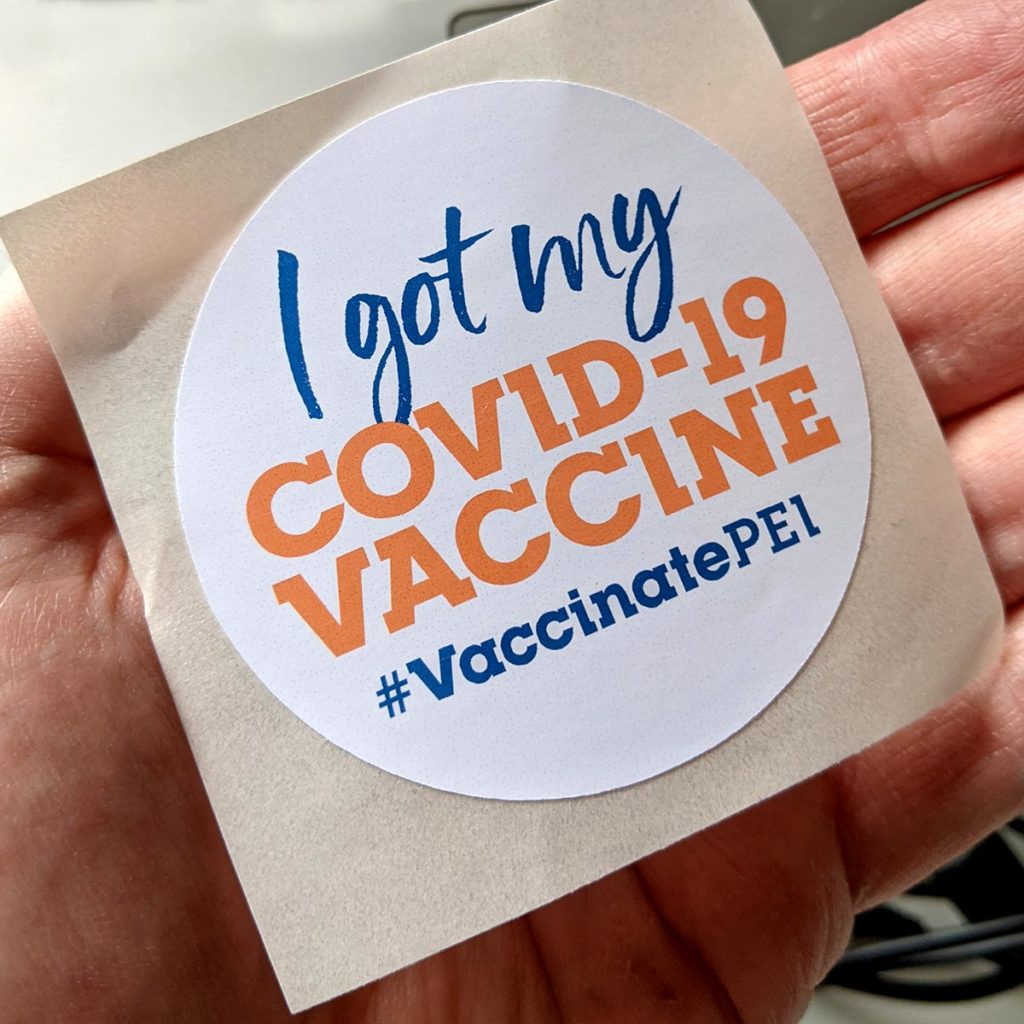
In the introduction to episode 425 of the Accidental Tech Podcast, Marco Arment made the following statement encouraging people who are eligible to get vaccinated (note that my transcription here isn’t word-for-word, as I’ve trimmed it a bit for clarify):

“We don’t get a lot of chances as a society to really step up and serve the world in some big way. Most of us my age […] have not been alive during a military draft, certainly not the big world wars. This is something that we as a society are really given a huge opportunity and duty here to help the world out – help us get out of this pandemic – help literally save peoples’ lives by stopping this virus, and the way we do that is widespread vaccination. […]

Those of us who can get vaccinated I think have a duty to everyone else who can’t […]

Marco Arment, on the Accidental Tech Podcast episode 425 (transcribed here generously and not word-for-word is it was spoken extemporaneously)

I like the way Marco framed this. Though I’ve long been looking forward to getting vaccinated and will do so as soon as possible (my turn will be coming in the next two months), I hadn’t quite thought of it as part of a once-in-a-generation (hopefully) movement of collective-service. I don’t mean to (nor do I think Marco meant to) compare getting a vaccine to fighting in an actual military conflict, but that’s kind of the point — the service we have to perform here is pretty easy.

While I like to avoid metaphors and language of war and violence, I think it could be effective to communicate an effort like mass vaccination or combating (there’s that war language) climate change as a ‘wartime effort’.


The best diagram on Wikipedia?

There’s a page on Wikipedia about the absurdly long, but grammatically correct, English sentence:

Buffalo buffalo Buffalo buffalo buffalo buffalo Buffalo buffalo

As if that weren’t enough, there’s a delightful diagram to help explain sentence:

While I love the absurdity of the diagram above, there’s another image on the Wikipedia page that I found more effective in explaining the buffalo sentence:


How to make it (slightly) easier to swallow pills

I’ve never been good at swallowing pills. When I do, I need lots of water and I throw my head back and forward in a graceless hideous spasm of multiple failed attempts. If someone is looking at me, it gets even more difficult. I’ve gotten a bit better at it through years of practice, but I still don’t like it.

I learned recently that I find it a bit easier to swallow pills if I use fizzy water (carbonated water) like Bubly, La Croix, or from something like a Soda Stream, as in my case.

If you’re like me and struggle a bit when swallowing pills, try fizzy water.


Blue Shell theory goes academic

Back in February, I wrote about A Mario Kart theory of media and economics. I learned today that a researcher from Boston University, Andrew Bell, had already an academic paper about using the Mario-Kart balance principles to help with environmental governance (behind a paywall). Bell’s paper is also covered by Boston University’s research magazine.

Let’s hope that Blue Shell theory gets more attention. It also occurrs to me that the basic concept (giving better/more resources to those who need it more) is also a video-game version of Marx’s “to each according to his needs”.

Also, it’s really too bad that academic papers are pay-walled.


How to sing to yourself while you work at home alone

Like many people this year and last, I’ve been working from home. During much of the day, I’m the only person in the house. While doing some types of work, I like to listen to music and sometimes find myself singing along. I stumbled across a way to make singing along with your headphones more fun (and, if someone comes home, even more embarrassing).

If you have a microphone that doesn’t pick up much sound from your headphones (my headphones have a mic mounted on an arm, like a dorky air traffic controller), you can use that mic you hear your own voice along with your music, but better.

On a Mac, start up GarageBand. There are probably equivalents for other operating systems.

Create an empty new project and choose the microphone audio track type:

Screenshot of the new-track dialog in GarageBand
My “instrument” is my voice, man

Make sure monitoring is turned on and that it’s using your mic as the input:

Screenshot of track settings in GarageBand
The orange-ish button is the monitoring feature (to hear yourself).

Select your track and use the Controls panel (screenshot below) to enable some Reverb and Ambience effects, and tweak the EQ levels. I like adding some bass (“LOW”) to make up for a tinny headset mic. Adding reverb really helps smooth over your terrible singing voice.

Screenshot of track audio controls in GarageBand including EQ, AMBIENCE, and REVERB

Now, play your favourite music (with any music app on your computer, like Spotify or Apple Music) through your headphones, sing like a fool, and be amazed to hear your bass-y and reverb-soaked voice blending in with your favourite songs. You can tweak the output volume of your regular music app and of your voice in GarageBand to find the right balance.

You’re welcome.


Minced oath

Today, while confirming the spelling of the French term sacre bleu (for an important work presentation), I came across the term “minced oath”.

According to Wikipedia:

A minced oath is a euphemistic expression formed by deliberately misspelling, mispronouncing, or replacing a part of a profane, blasphemous, or taboo word or phrase to reduce the original term’s objectionable characteristics.

Wikipedia

Examples include gosh or golly (instead of God), or dang or darn instead of damn.

Minced oath is a flippin’ great term.


It’s not the world, it’s you.

In his interview with author George Saunders (at 48 minutes in), Ezra Klein shared this anecdote:

Someone once told me that whenever you think “huh, that doesn’t make sense”, what it means is that your model of the world doesn’t make sense. The world always makes sense on its own terms. It’s you is missing something.

Ezra Klein, February 19, 2021

I find myself thinking “huh, that doesn’t make sense” a lot lately. This seems like it could be a helpful way to rethink those situations.


Brad Sucks, still

Brad wearing a floral-pattern shirt with long pandemic hair and a hand giving him the middle-finger.
Brad really pops against this reddish-orange.

Back in 2008, Brad Turcotte, aka Brad Sucks, came to our Zap Your PRAM conference in Dalvay-by-the-Sea, Prince Edward Island. He generously shared a look into his songwriting process and let us leach off of his Internet fame.

Brad’s 2003 album included the Internet-hit Making Me Nervous, which still holds up. My favourite song from that album was Overreacting.

Brad’s got a new album, A New Low In Hi-Fi, coming out in June. The first single, In It To Win It is out now. Congrats on the new album, Brad.

You can support Brad’s music on Patreon.