Every time you throw an apple core out the window of a moving car on a country road, you hit the ghost of Leslie Nielsen in the face and knock him off a horse.
Author: Steven Garrity
Standardize milk label colors now!
Here in my home province of PEI (née Epekwitk), we have two primary dairy brands: Perfection/ADL and Purity. They both use similar white plastic bottles in four common milk-fat amounts: 3.25%, 2%, 1%, and Skim (fat-free).
Both dairies use color to differentiate the milk-fat variations. For 3.25% milk, they both use red. For 1% they both use a light blue (sort of, I’d call the ADL variation here teal, but it’s close enough). For 2% and skim milk, though, they colors don’t match, and worse still, blue is used for 2% Perfection, but Skim from Purity.
Our household has a wide variety of milk preferences and needs, and the inconsistency makes it easy to mix up milk types across brands. I ask you, the milk-producers of Prince Edward Island: come together and standardize!
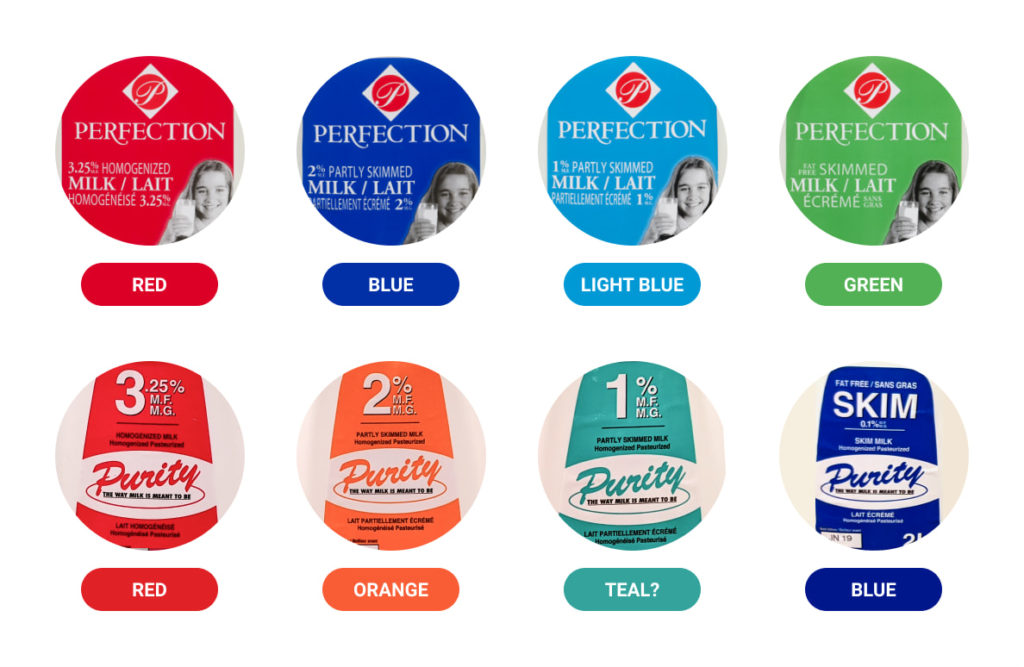
If Big Dairy of PEI wants to pay me to be the milk label czar, I’d use the rainbow to go from heavier to lighter milk variations: RED 3.25%, ORANGE 2%, GREEN 1%, BLUE Skim.
Both brands already get the color right for chocolate milk: brown, like the cows it comes from.
Bob McDonald is an active listener
Today at work we were talking about the concept active listening. Hearing the practices of “reflecting back what is said”, “asking for clarification”, and “summarizing” made me think of Bob McDonald.
Bob McDonald is the host of the CBC Radio science program, Quirks & Quarks. I also loved watching his science TV show Wonderstruck when I was a kid. I remember one episode of Wonderstruck about balance where Bob learned to center his mass over the rear axle of his mountain bike and rode around perfectly on the back-tire only.
On the Quirks & Quarks radio show, you can hear the pattern of asking questions of a guest, listening, and then reflecting back what was heard (often in simpler terms). It’s a great way to communicate, and it’s also a great way to host a science show. Keep active-listening, Bob!
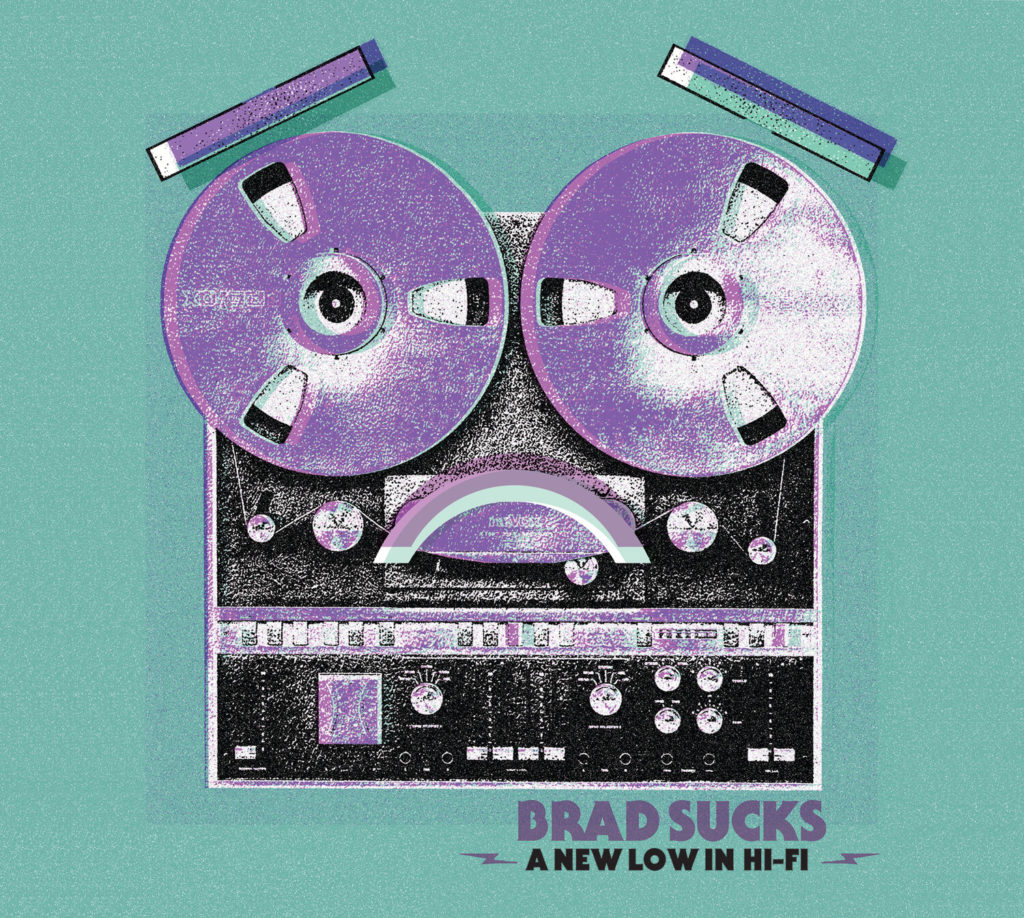
Brad Sucks: A New Low In Hi-Fi
I wrote back in April about Brad Sucks’ pending new album. It’s out today (June 10, 2021) and it’s great: A New Low in Hi-Fi.
The Charlottetown / Halifax weather radar blackout of 2021
I spend a lot of my time on the internet. Much of that time is spend checking the local weather via the Canadian Weather Radar service. Some time this year, one or two of the weather radar stations seems to have stopped reporting data on this page. As a result, a swath of PEI (née Epekwitk) and Nova Scotia is in a radar dead-zone. What gives?
UPDATE: As per this helpful comment from Isa, the Chipman – CASCM radar station (near Fredericton, New Brunswick) is having an “Unscheduled outage” and is expect to return on June 9, 2021 (a few days from the writing of this post).
UPDATE UPDATE: It turns out there are two simultaneous outages that I’m conflating here. The Chipman CASCM station mentioned above comes back online in a couple of days, but according to the CBC, the Halifax radar station will be offline until the end of August.
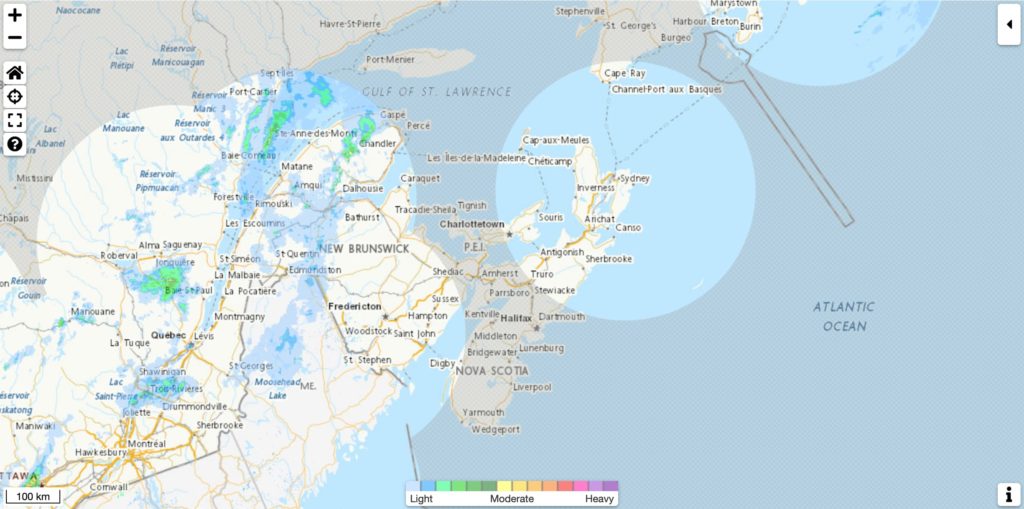
While we’re on the topic, there are a few other interesting things to note on this page:
- A recent redesign of this page added many improvements, but also made the large map area something with zooming and panning, which interferes with regular scrolling on the page (you have to make sure your cursor isn’t over the large map before scrolling).
- That long narrow rectangle-with-blob near the top right is the geopolitical peculiarity of Saint Pierre and Miquelon, a territory of France off of the Canadian province of Newfoundland.
Trivial Tragedy #7: The science class lie
This post is one of a series called Trivial Tragedies. Each installment is a small story of minor heartbreak that has stuck with me from my childhood.
I was a pretty good student in high school. I wasn’t great at applying myself, but I was capable of getting marks in the 80s and 90s. At the time I thought I was smart. I found out a couple of years later that my ease with math and physics was actually an ease with high-school-level math and physics. When later confronted with university-level material, I quickly realized that I needed to work hard and didn’t know how.
While I did well enough academically in high school, my attendance record was weak. Contingent on transportation of some kind, I skipped a lot of classes. Teachers didn’t press too hard on this, given how I was keeping up with the class.
I had one grade-12 science teacher who got suspicious. I skipped his class one afternoon. The next day as I entered his class, he asked me where I had been the day before. I steeled myself and lied. I told him I had been sick at home.
He had laid a trap for me. Before class, he had phoned my parents to confirm my absence for the day before. He knew I wasn’t home sick — he was asking to see how I would respond.
He looked me in the eye and earnestly asked: Why did you lie to me?
One of a handful of students who witnessed this train-wreck later told me that I actually “made a sound”. It might have been my soul leaving my body.
I don’t even know how I responded, but it felt like a punch in the gut made out of shame and regret. Skipping a class wasn’t a big deal, but an adult human being looking you in the eye and sincerely asking you why you lied to them — that left a mark.
I remember thinking: you’re a high-school teacher and I’m a student — aren’t I supposed to lie to you?
Even though that moment has stuck with me for about 25 years, it didn’t do much to change my behaviour. A few weeks later, I had a friend call the school office and have me paged for a “dentist appointment”.
The PA-system in our class passed on the message. I packed up my things and walked across the front of the class to the door. I’m not sure what the teacher was thinking, but every kid in that class knew exactly what was happening. I knew they knew, and they knew I knew. For about twenty seconds, I was Ferris Bueller.
Naming things is hard: WordTsar
Naming things is hard. I applaud those who named this project, a clone of the vintage WordStar word processor. They named their WordStar clone WordTsar. Well played.
See more examples of how naming things is hard.
Let’s rename Prince Edward Island
Prince Edward Island is a special place. Most people elsewhere in the world know of it as a place with nice beaches (true), a place that grows good potatoes (true), or the place from the Anne of Green Gables books (true).
It has been called Prince Edward Island (or P.E.I. as we call it) since it was renamed by British colonists in 1798. Before that was was called Île Saint-Jean (St. John’s Island) by French colonists. Before that, it was Epekwitk.
The name Epekwitk is from the language of the Miꞌkmaq People who have lived here for thousands of years. Epekwitk is pronounced ehb-uh-gwihd and has been anglicised as Abegweit.
Despite having watched every episode of The Crown, I don’t know much about His Royal Highness The Prince Edward, Duke of Kent and Strathearn, after whom our island is currently named. To be clear, we’re talking about the Duke of Kent and Strathearn born in 1767, not the Earl of Wessex who was born in 1964. There’s little risk of a British Royal Family member being forgotten by history or lacking in honours. Prince Edward has a whole section for “Titles, styles, honours and arms” on Wikipedia (along with a section on mistresses).
Unlike the legacy of His Royal Highness, the history and legacy (and the present and future) of the Miꞌkmaq People is at risk.
Thanks to efforts by the L’nuey group, PEI has been adding the Miꞌkmaw names for communities to the official signage (for example, Cape Egmont is Mntuapskuk). I’ve appreciated these new signs and would like to see us go much further.
Let’s restore the original name of our island. Let’s rename Prince Edward Island to Epekwitk.
It is worth noting that I’m not an expert on the etymology of PEI. I’m just a white man who was born here and read the Wikipedia page. I do not think we should take back the name as though it belongs to us. It really belongs to the Miꞌkmaq People of Epekwitk. Renaming this Canadian province is something I think we should to do honour the Miꞌkmaq People, but that honour should be theirs to accept or reject and to own and control.
It’s only worth making such a change if we’re also willing to make more substantial moves to respect the rights and cultures of indigenous people. A name change is a gesture. Gestures can be helpful and gestures can be hollow. To learn more about what else we can do, follow L’nuey on Twitter.
Disproportionate time compression in a shortened week
When a typical five-day work week is cut short by a holiday, as this week is in Canada by Victoria Day, peculiar physical properties of a scheduled week are revealed.
When the week is compressed, not all parts of that week compress equally. Events that are scheduled, especially regular and recurring events, tend to remain scheduled with their usual frequency and duration. Even though the week is squeezed, these events resist compression and hold their size. It’s the space around these events, the unscheduled time, that does all of the compressing.
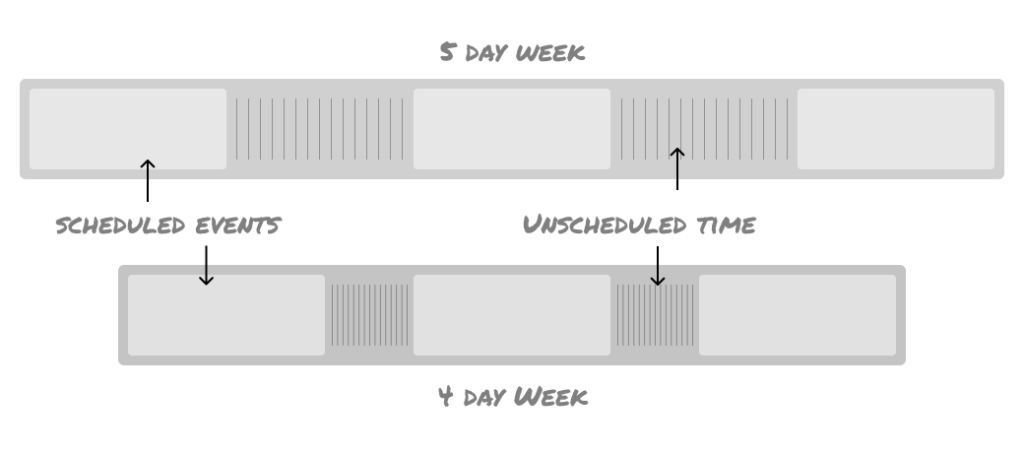
Be aware that the unscheduled time in a shortened week is compressed disproportionately to the rest of the week.
Lena: Wikipedia entry as fiction format
Lena is a science-fiction short story written in the form of a hypothetical future Wikipedia page. The format is clever and used to good effect in telling the story.
The title of the story is a reference to a commonly used test image.
I’ve lost track of who pointed me to this link, but thanks, whoever you were.