Trivial Tragedies — sad stories from privileged childhood

When you’re blessed, as I was, with a healthy, pleasant, and generally good childhood, you really have to look hard to find heartbreak. When all you’ve known is stability and pleasantness, though, little problems can seem like big disasters. Such is the delight and tragedy of childhood that you can be in a divine delight over a toy or a hug in one minute, and in the depths of despair over a lost marble in the next.

When you’re a child, your heart is easily delighted and just as easily broken.

I find something strangely compelling about the little things that seem like great wrongs as a child. So, I give you a series of such tales: Trivial Tragedies, a series of insignificant heartbreaks. I’ll keep a running list of the stories here as I publish them:


Helmet hyper-empathy

I’ve been reading and appreciating the two Parable books from Octavia E. Butler, The Parable of the Sower and The Parable of the Talents. They are powerful books. I can’t quite say I’m enjoying them, because the characters endure such horrible events (including sexual violence against children — it’s dark). It reminds me of The Road by Cormac McCarthy in that it is well-written, compelling, and a powerful story, but depicts a world so awful that it’s difficult to engage.

[Spoilers for the Parable books below]

In the world of Butler’s Parable books, some people are gifted/afflicted with a hyper-empathy condition, as a side-effect of drug use during their mothers’ pregnancy. They feel the pain (and less often, the pleasure) of others they see. If they see you break your leg, they feel like they’ve broken their own leg.

All of that said, I’ve concluded that I have a particular type of hyper-empathy. It only applies to people I see wearing bicycle helmets backwards. Even though they may not know of their shame yet, I feel it deeply.


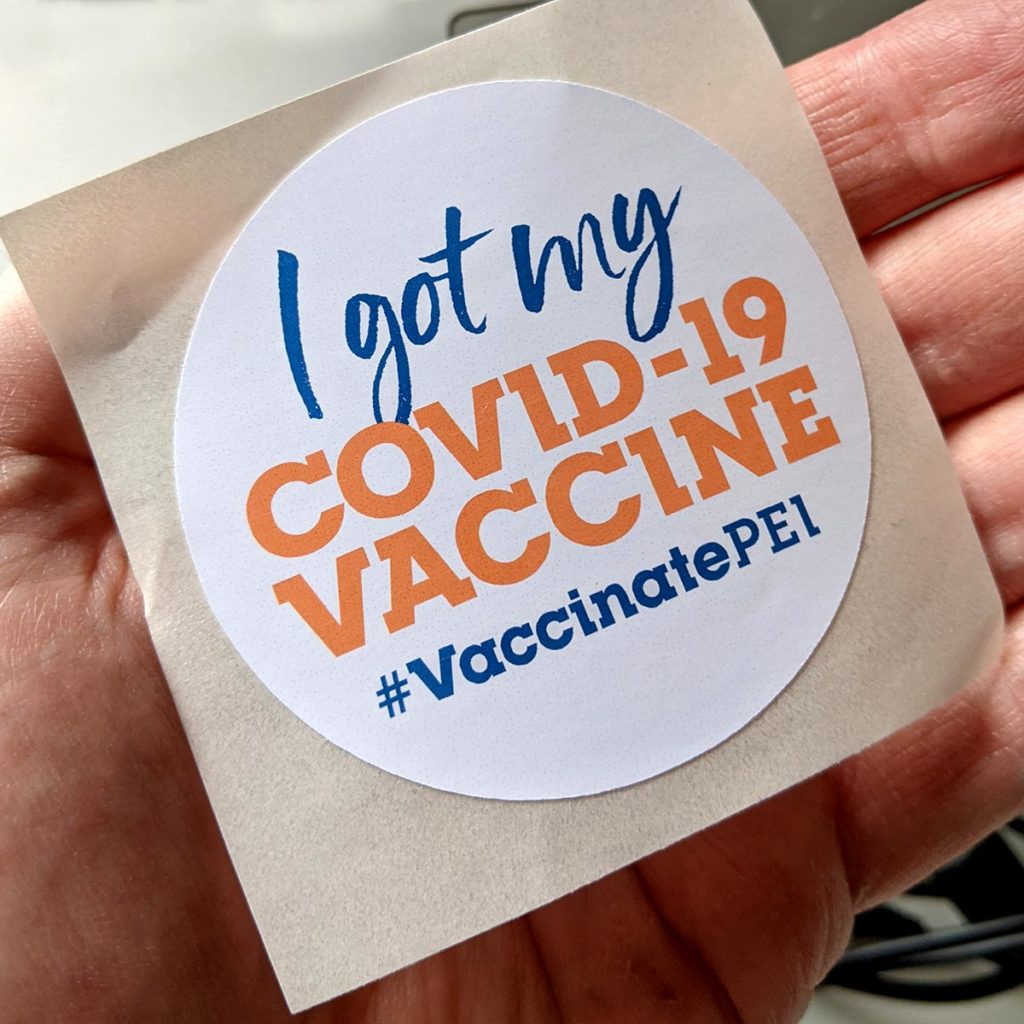
Vaccination as generational public service

In the introduction to episode 425 of the Accidental Tech Podcast, Marco Arment made the following statement encouraging people who are eligible to get vaccinated (note that my transcription here isn’t word-for-word, as I’ve trimmed it a bit for clarify):

“We don’t get a lot of chances as a society to really step up and serve the world in some big way. Most of us my age […] have not been alive during a military draft, certainly not the big world wars. This is something that we as a society are really given a huge opportunity and duty here to help the world out – help us get out of this pandemic – help literally save peoples’ lives by stopping this virus, and the way we do that is widespread vaccination. […]

Those of us who can get vaccinated I think have a duty to everyone else who can’t […]

Marco Arment, on the Accidental Tech Podcast episode 425 (transcribed here generously and not word-for-word is it was spoken extemporaneously)

I like the way Marco framed this. Though I’ve long been looking forward to getting vaccinated and will do so as soon as possible (my turn will be coming in the next two months), I hadn’t quite thought of it as part of a once-in-a-generation (hopefully) movement of collective-service. I don’t mean to (nor do I think Marco meant to) compare getting a vaccine to fighting in an actual military conflict, but that’s kind of the point — the service we have to perform here is pretty easy.

While I like to avoid metaphors and language of war and violence, I think it could be effective to communicate an effort like mass vaccination or combating (there’s that war language) climate change as a ‘wartime effort’.


The best diagram on Wikipedia?

There’s a page on Wikipedia about the absurdly long, but grammatically correct, English sentence:

Buffalo buffalo Buffalo buffalo buffalo buffalo Buffalo buffalo

As if that weren’t enough, there’s a delightful diagram to help explain sentence:

While I love the absurdity of the diagram above, there’s another image on the Wikipedia page that I found more effective in explaining the buffalo sentence:


How to make it (slightly) easier to swallow pills

I’ve never been good at swallowing pills. When I do, I need lots of water and I throw my head back and forward in a graceless hideous spasm of multiple failed attempts. If someone is looking at me, it gets even more difficult. I’ve gotten a bit better at it through years of practice, but I still don’t like it.

I learned recently that I find it a bit easier to swallow pills if I use fizzy water (carbonated water) like Bubly, La Croix, or from something like a Soda Stream, as in my case.

If you’re like me and struggle a bit when swallowing pills, try fizzy water.


Blue Shell theory goes academic

Back in February, I wrote about A Mario Kart theory of media and economics. I learned today that a researcher from Boston University, Andrew Bell, had already an academic paper about using the Mario-Kart balance principles to help with environmental governance (behind a paywall). Bell’s paper is also covered by Boston University’s research magazine.

Let’s hope that Blue Shell theory gets more attention. It also occurrs to me that the basic concept (giving better/more resources to those who need it more) is also a video-game version of Marx’s “to each according to his needs”.

Also, it’s really too bad that academic papers are pay-walled.