From the mire of unemployment comes mirth. Ben Brown, unemployed programmer extraordinaire, presents The Ben Brown Show (approx 7MB QuickTime).
Each show will only be up for a day – so check back often.
From the mire of unemployment comes mirth. Ben Brown, unemployed programmer extraordinaire, presents The Ben Brown Show (approx 7MB QuickTime).
Each show will only be up for a day – so check back often.
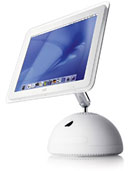 My thoughts, since I know you are all eagerly awaiting them, on the new iMac:
Steve Jobs uses phrases like “never been done before” and “revolutionary” like nobodies business. It’s interesting though, I think that the quiet revolution in personal computing is happening right now and it has to do with things just working.
Douglas Adams said that technology is a term for stuff that doesn’t work yet. Good call. Slowly – very slowly, computers are starting to just work. Now don’t get me wrong, I could list loads of instances where computers have failed me in the past month, but things are improving.
A few examples of technology that “just worked”:
I’m sure I could compile a must longer list of less successful technical endeavors but I do think these features are becoming more common. It is these small things that will eventually make computers accessible to more people. Apple’s Movie, iTunes, iDVD, and new iPhoto software seem to do well to make these functions more accessible to more people. Windows XP does its part in this respect as well (good handling of photos, digital cameras, etc.). Even applications like Microsoft Word, Excel, and PowerPoint have matured to a point where there are starting to feel simpler even as they become more complex.
What similar experiences have you had with technology recently?
I am a traffic junkie. I came embarassingly close to nominating our own site for a weblog award. Somebody else go do it (there’s a Canadian category).
I know I’m playing right into the hands to Apple’s marketing people, but I can’t help it – I find good marketing entertaining. I’ve criticized Apple fans on this site before (I’m suspicious of anyone who ‘loves’ a computer company, but maybe that’s just a defense mechanism) but I don’t criticize Apple’s own marketing though – they are good at it. They make me want to know what the next product will be (even though I’ve never owned an Apple product in my life).
The hype over their new iPod portable MP3 player was way beyond what any product could live up to. It’s a cool toy, but people’s expectations were just too much (ala Segway, which is really cool, regardless of how revolutionary it may or may not be). This time, it’s Apple themselves that is blowing the hot air. In preparation for the MacWorld Expo in San Francisco on January 7th. Yesterday the Apple website said (in their proud and recognizable font): “This one is big. Even by our standards”. Today, in response to a flurry of web-rumors about the launch the site read, “Beyond the rumor sites. Way beyond.”.
I admit with some shame, that I am excited about this. Even though I don’t buy them, I enjoy watching Apple’s products evolve.
I posted this topic on MetaFilter this morning and the mac-crazies came crawling out of the woodwork. One particularly good post summarizes the most popular possibilities of what the announcement may be.
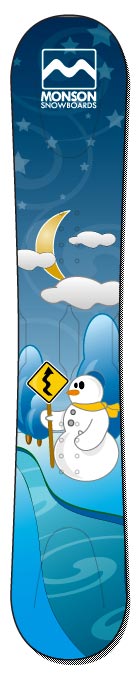
I’ve never been big on design competitions. Especially when the prize consists of your work being used without financial compensation. If you want good design, find a good designer and pay her.
That said, the Monson Snowboard Design Contest caught my attention because of the caliber of some of last years winners (I voted for Snow Burner and Relax 163) and because of the ultra-hip-hot-pants sponsors (k10k, surfstation, three.oh, designiskinky, etc.).
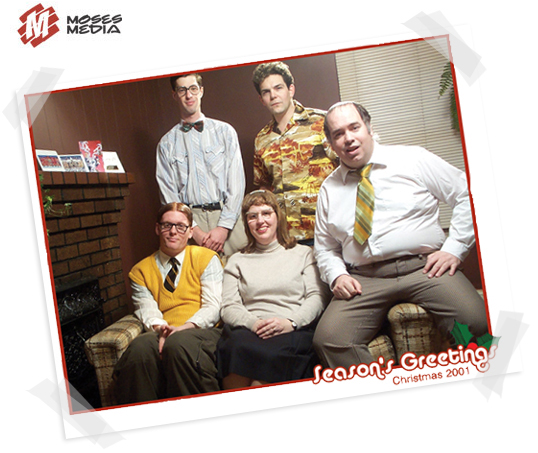
This year, the list of sponsors is longer and cooler, including Australian INFront and recent aov-linkers Coudal Partners. I thought about entering, but didn’t get around to it. Then yesterday, my good friend Ffoeg (the one in the yellow sweater-vest on Moses Media’s sweet xmas splash page) stopped by with his designs and encouraged me to whip up something quick. I did.
The trouble with a contest like this is, since the finalists are chosen by public vote, it’s more battle of who can design the best little-JPGS-shaped-like-a-snowboard rather than who can design the best actual snowboard. It’s hard to imagine these things five feet long. Still a fun excercise though.
Voting starts next month, but you shouldn’t vote for my designs, you should vote for Ffoeg’s drac or RoBo or one of these other beauties.
Some of my favourites include snowypeaks, flame, Giraffes Think, Paisley and pure novelty, see hotdog and slotcar.
Most clever entry: //STYLESHEET//. Best use of type (I tried to do something like this, failed, and gave up): racefortheprize. Generally cool: king of m.
Best entries so far, in my opinion:
Van Gogh Summer and winter. I can’t get enough of that Super-Mario-World-meets-Windows-XP soft gradient illustration style.
My humble entries are slice and blues.
When I become a filthy rich eccentric – which will probably not be until late 2003 at the earliest – I will lavish myself with a few key niceties. I will wear a new pair of socks everyday forever.
I’ve thought about putting some kind of charitable spin on it, like giving my ‘worn-once’ socks to charity, like Michael Jordan does with his shoes – but I don’t think that the same good karma would come if it were socks instead. Perhaps I’ll just give cash (I will be rich at this point anyhow).
As this dream of mine (not to become wealthy, but to wear a new pair of socks everyday if I ever do) is well known to my family and friends, I do well at Christmas. This year, I would estimate I received approximately 20 pairs of socks. January is going to be a good month.
What will your wealthy eccentric traits be?
UPDATE: Checkout what I think is one of the funniest replies yet on aov – if this was indeed written solely for post here on aov, then I’m very impressed. If not, it’s still funny.
Who else is browsing the web on Christmas morning? Show yourselves!
Don’t pity me though. I just spent the last three hours opening gifts with my family.

The animal computer book cover series by O’Reilly is consistent, unique, memorable, and beautiful. The brainchild of Edie Freedman, now O’Reilly’s creative director, the books have become as recognizable as the Dummies series, at least to their own more self confident audience.
I’ve long admired the covers for the beautiful illustrations and the strong and well balanced white space and solid color block design program that houses them. The animals started as 19th century wood engravings, but most are now drawn by one of O’Reilly’s own editors who is also a part-time illustrator.
 For more information and background on the O’Reilly animal book covers, see Animal Magnetism: Making O’Reilly Animals and Edie Freedman’s own Origin of Species: A History of O’Reilly Animals.
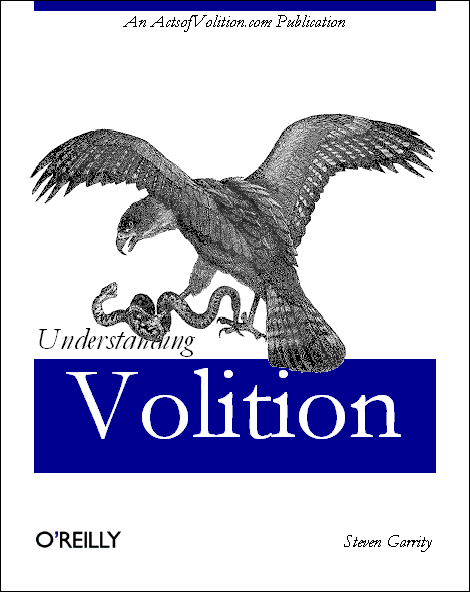
Discovered at the last minute: Design Your Own O’Reilly Book Cover. Here’s mine.
 The latest build of the Mozilla project browser is released (version 0.9.7) and included, among many other improvements, on the What’s New list is the following:
This might not sound like a big deal, but it is the little touches like this that make software feel cruel or friendly to the end user. It’s also features like this that aren’t apparent while you’re building the software – but when you’re using the software.
We are honoured to be included with our inclusion on the Kottke.org links b-list. Those chumps on the c-list can suck it.
Struggling with the thought that there could be others better than ourselves, I checked out kottke.org a-list of links. 
Most I was familiar with (Harrumph, Evhead, a.whole, etc.) but some were strange and new.
The best of the pack is Stewart Butterfield’s Sylloge.com. Stewart (along with Eric Costello of the very cool glish.com) runs the infamous but wonderful 5k Contest. His personal blog is absolutely beautiful.
Speaking of beautiful weblogs, see fellow kottke b-lister Dollar Short.