I enjoy how the Hyundai Canada website asks you to choose between a gigantic container ship and a hatchback EV.

I enjoy how the Hyundai Canada website asks you to choose between a gigantic container ship and a hatchback EV.
I was surprised to learn today that the distinctive guitar sound from Sheryl Crow’s song My Favorite Mistake, is from Wendy Melvoin, who played guitar with Prince for much of her career. I learned this on the Dead Wax YouTube channel (which has some great guests, but I’m having a hard time with the over-the-top YouTube-thumbnail enthusiasm).
I was surprised to hear this, and hit up Wendy Melvoin on Wikipedia. You could spend a full day with the links on this page. A few that stuck out to me:
This post is best read in the voice of Casey Kasem.
My friend and colleague Maureen wrote about how learning needs to be part of the job.
My family got me the perfect Father’s Day gift this year. First, some background.
Living, as we do, on Prince Edward Island, we have access to some beautiful beaches. I spent my summers as a child at a cottage near a beach, and we visit the beach lots now that I have kids of my own.
I don’t actually like the beach. The air is too hot, the water is too cold (and there are things in it), there’s sand everywhere. There’s no coffee shop. One star.
What I learned in the past few years, though, is that if you add a stream to a beach, my opinion changes dramatically. There are two beaches we frequent in the summer that both have a small streams that runs from an inland pond, across the beach, and out into the ocean.
These streams change dramatically day to day, depending on the tides and currents. One day, a stream might run straight down the beach to the ocean. Another day, it might wind down the beach, parallel to the ocean for up to one or two hundred meters before meeting the ocean.
This running fresh water gives you something to mess around with. If you dig a shorter path for the water to take from stream to the sea, gravity will take over. Your little canal, no wider than your hand, grow larger and larger and can completely reshape the flow of the stream.
I love this. I can dig this miniature mega-projects for hours. I last for twenty minutes at a beach with no stream. Add a stream, and I’m in for the day.
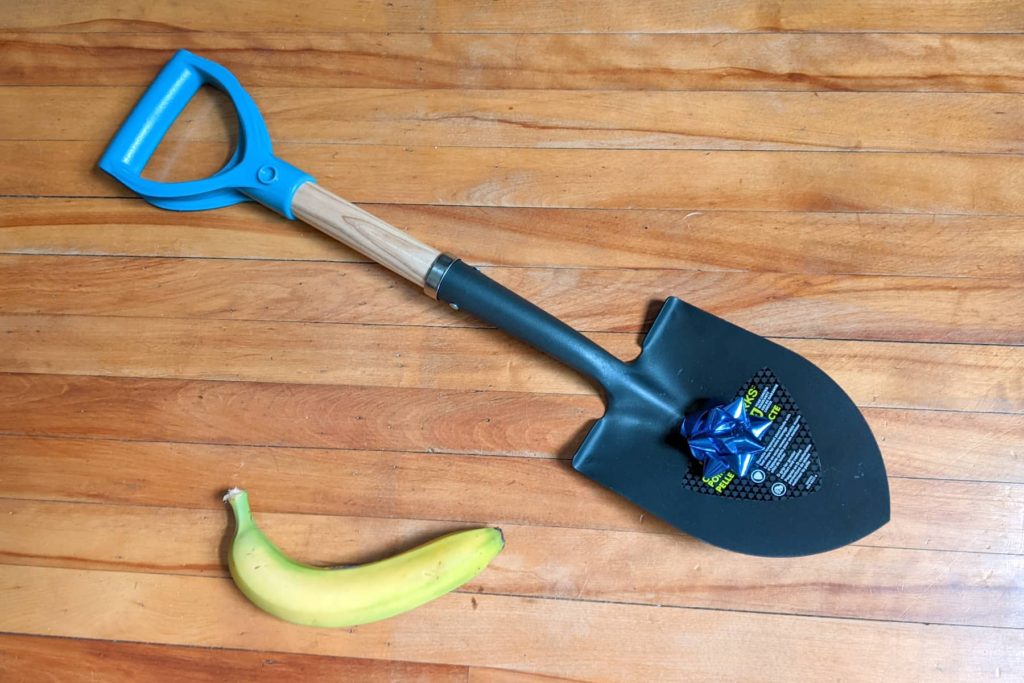
So, my family got me a mini-shovel for this beach digging. It’s a glorified beach-toy, and I can’t wait to use it. Like many great gifts, it’s something I thought about getting, but felt it was a silly indulgence and never bothered to actually buy it myself. I love it!
I noticed a new sensation today as I was looking at the news article on the web. I was about to start scrolling down and felt a pang that if I scroll, the whole page might be suddenly obscured by a pop-up prompting me to pay for access or sign up to a newsletter.

I don’t fault publications for trying to get paid. I’m sure this kind of paywall is used because it works. I actually think the constant frustrations of paywalls got me to pay for access to some publications during the 2016 US election.
It can’t be a good sign that I’m worried (not matter how insignificantly), about scrolling on a web page, lest if be clobbered by some kind of promotional overlay.
It’s easy to identify and criticize bad design. When an object is well designed though, you often don’t notice it (by design).
There are two monoliths that stand outside by house. One green and one black. These waste and compost bins, distributed by the provincial government, are well designed.
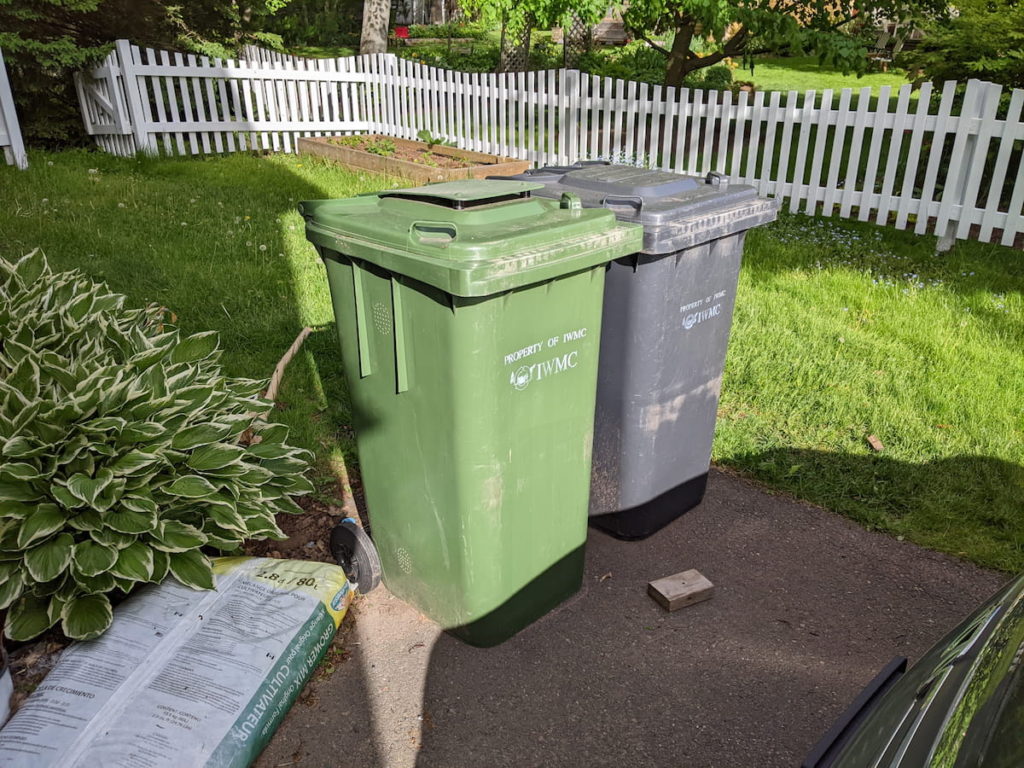
They aren’t perfect. They can build of water (or worse, “garbage juice”) at the bottom and turn rancid. They are waste bins.
Thanks to those who designed these bins and those who identified procured them in our province.
After all, one person’s trash is another person’s, uh, metaphor!
I previously shared the result of an exercise in home recording: my lament for Niel Gow’s Lament for the Death of his Second Wife. I have a second such exercise to share.
In this recording exercise, I wanted to try something I feel is more difficult: recording loud over-driven guitars. Getting a recorded clean guitar tone to sound okay is relatively easy. Getting a loud, fuzzy, distorted/over-driven guitar to sound good on a recording is a whole other task.
I was aiming for the buzzing guitar sounds like those on Over It by Dinosaur Jr. and Out of Routine by Idlewild. I didn’t have to get close to those – but it was helpful to have a starting direction.
I also drew on an approach to composition I recalled from an interview with Crystal Method. I couldn’t find the source, but from my fuzzy memory, when asked how they built a song, they said something like this (heavily paraphrased):
Keep adding stuff until they get bored, take stuff away until they miss it, then add it back.
The result is a minute-and-a-half of guitars I’ve called Idle Junior:
The biggest challenges continue to be the paralysis of choice. When you can dial up any guitar effect, amp, or sound you can imagine, where do you start? Setting some constraints helps. For this exercise, I wanted something at least a minute long, but not a full 3 or 4 minute song. I knew I wouldn’t have any lyrics/vocals, and I knew I wanted to try out some loud/fuzzy guitars.
Recording music is an art that I barely understand. For every minute of playing music, there must be an hour of arranging, adjusting, experiment at the computer.
A few implementation details:
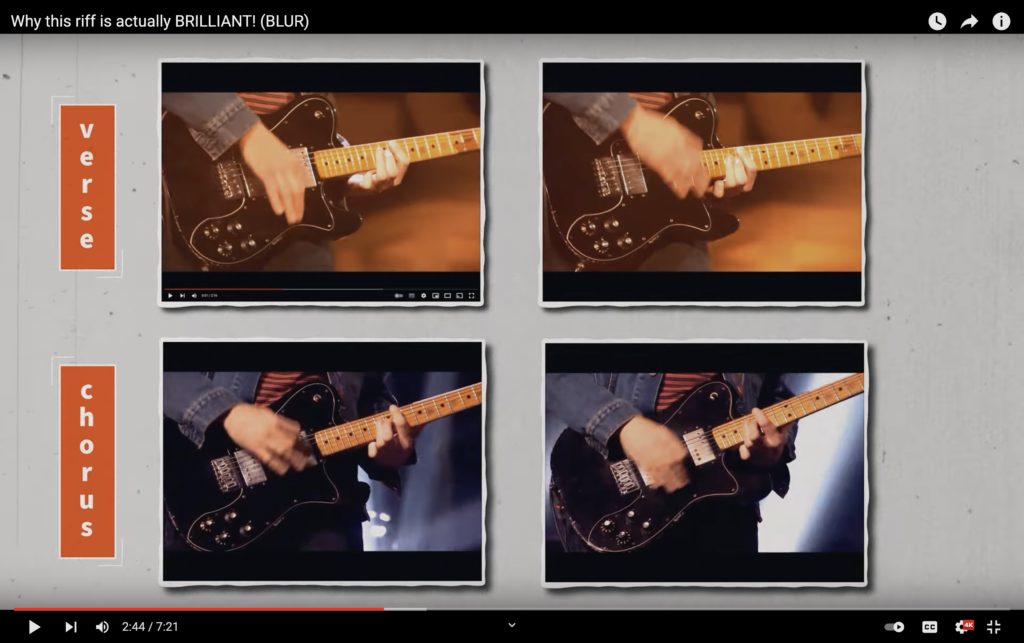
YouTube Guitar-Guy Paul Davids does a great dive into how rich the seemingly simple tones of Blur’s Song 2 really are. Davids doesn’t address the distorted bass, which is a big part of the sound, but his video will still make you enjoy Song 2 even more.
I saw the amazing Nova Scotia band Sandbox play in Charlottetown PEI some time in the late 90s and they did a blistering cover of Song 2.
These types of YouTube channels have such high levels of production quality that it’s almost unsettling.
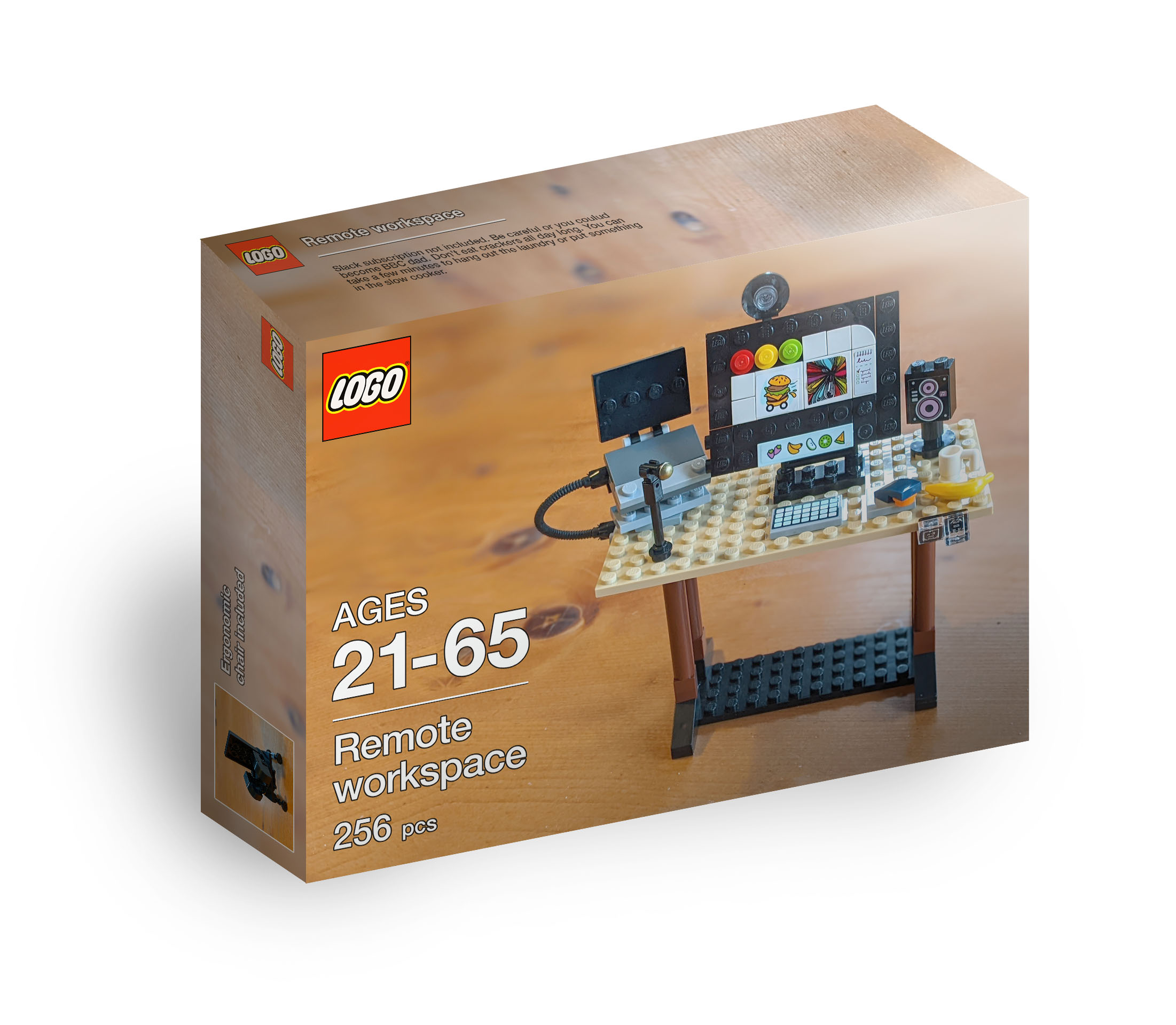
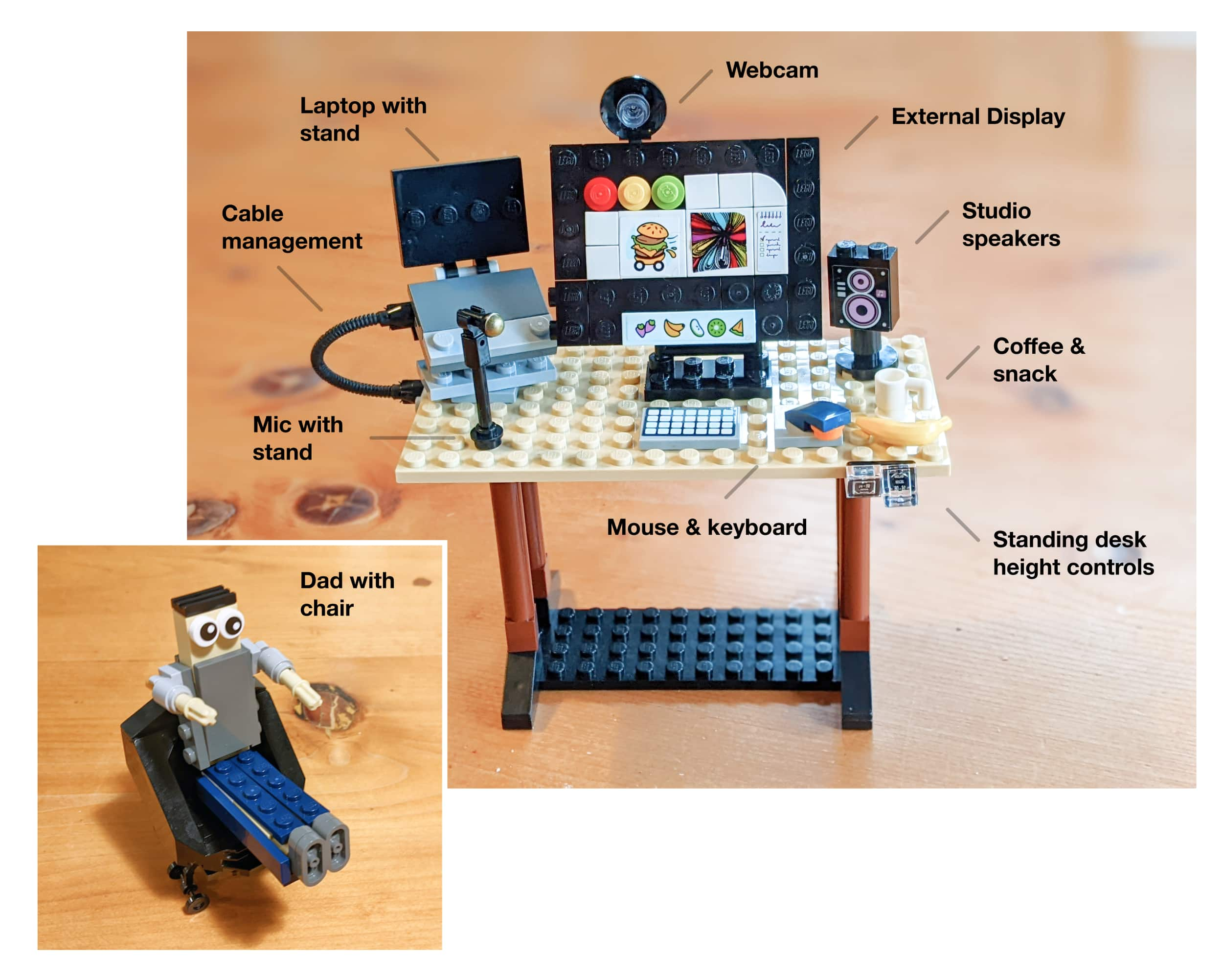
I made a Lego build I felt proud enough to share, including some great help from the kids (the Dad figure was all them).
I’ve been playing around with some simple home recording recently and am impressed with the state of the tools.
GarageBand comes is “free” (with an expensive computer) and is remarkably capable. I’ve been playing guitar quietly into my headphones via the Fender Mustang Micro. I realized I could plug the Mustang Micro into my laptop and start using modelled (‘virtual’) guitar amps and effects.
When I lasted checked in with digitally modelled guitar gear around fifteen years ago, it was still mostly a novelty. Now, they sound great. If anything, they give you an immediately paralyzing paradox of choice by offering you every guitar amp and effects pedal ever made.
As a way to try out getting something recorded, I conceived of an intentionally simple and limited recording project. I made a simplified arrangement of Niel Gow‘s Lament for the Death of his Second Wife. Gow composed the original in 1805 at 78 years old. The piece has been haunting me since I heard Tim Chaisson play it on a piano at the Zap Your PRAM conference in 2008.
My arrangement is much less nuanced than Tim’s. It was a quick proof-of-concept to see how recording guitar with digital gear can work.
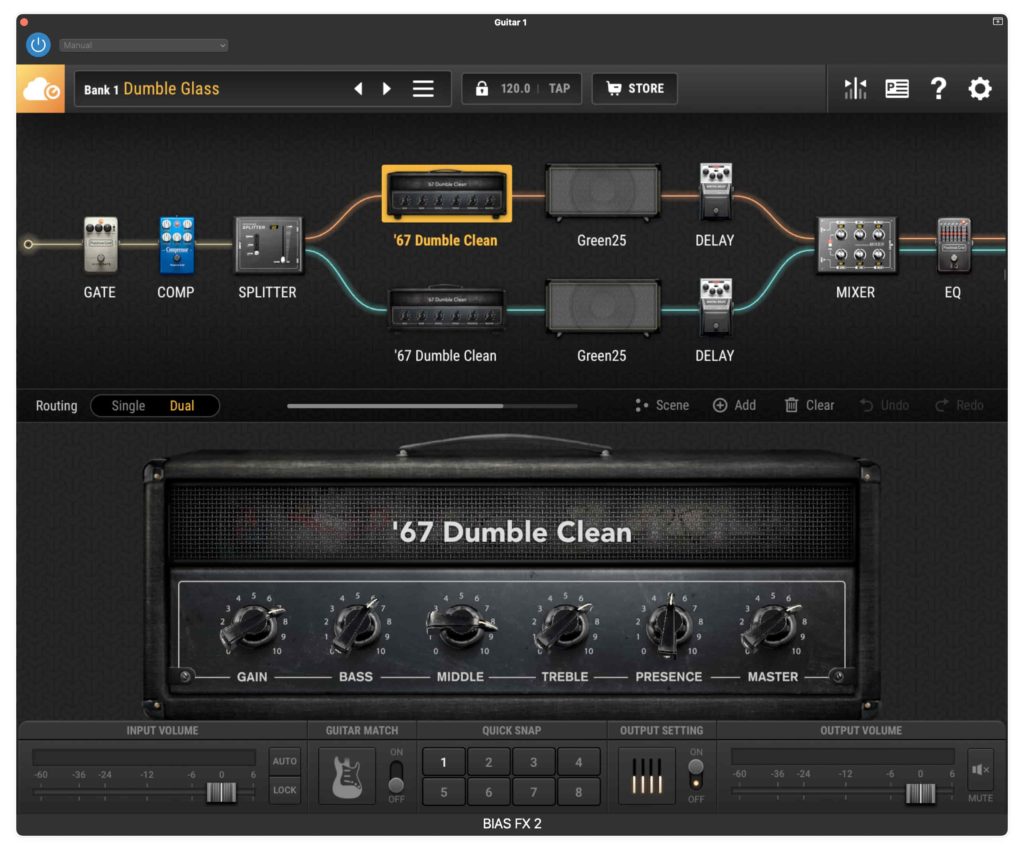
While I’m trying not to focus too much on the technical details and enjoy making music, I do have some implementation details for anyone interested: