Since my day-to-day life is already quite a bit like what most people would consider a vacation, taking an actual vacation isn’t something I do very often. This year, I decided to take a week, pack up some book, and take to my parent’s cottage in Stanhope, Prince Edward Island.
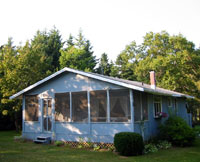 My parents built this cottage with my grandparents back in the early 1970s. I spent most of my summers here as a child. As a teenager, I came to associate the cottage with boredom and a lack of television channels (ironically, now the cottage here has way more channels that I have at home). Now, it’s exactly what I need.
Only on Prince Edward Island would someone take a vacation at a cottage that is only a fifteen minute drive from their home. However, it’s not so much the location that I was looking for (as beautiful as it is), and the fact that it was somewhere else. I needed a break in routine and a change of scenery (both literally and figuratively).
I’m pleased to report that I actually feel like I’m on vacation. I was a little concerned that I’d get bored after a few hours and just go back to work. That won’t be a problem.
A few observations from living on a dial-up connection for a few days:
- It works — I can do most everything I need on a dialup.
- If something is slow, you don’t bother — I’ve dropped heavy sites from my regular visit list (News.com was going to be dropped, but they conveniently redesigned with CSS during my vacation).
- Tabbed browsing is a mixed blessing on a dialup. On one hand, it’s a bandwidth killer — I often open a group of 10 or more weblogs in tabs — that really swamps a dialup. On the other hand, you can open 10 sites in tabs, get a cup of tea, and do all of your waiting/downloading at once.
- Spam goes from being a small annoyance on a fast connection with good filtering to being a major pain in the ass on a dialup, where you have to download all the spam before filtering (on the bright side, we’ll soon be able to handle spam on the server side).
 I’m only half-way through, but I’ve already got a load of vacation photos up in my gallery. The one advantage of tourists feading the foxes in the National Park is that the foxes will walk right up to your car (bad for foxes, good for photos).
Oh, and if you would like to rent my parent’s cottage next summer, let them know.
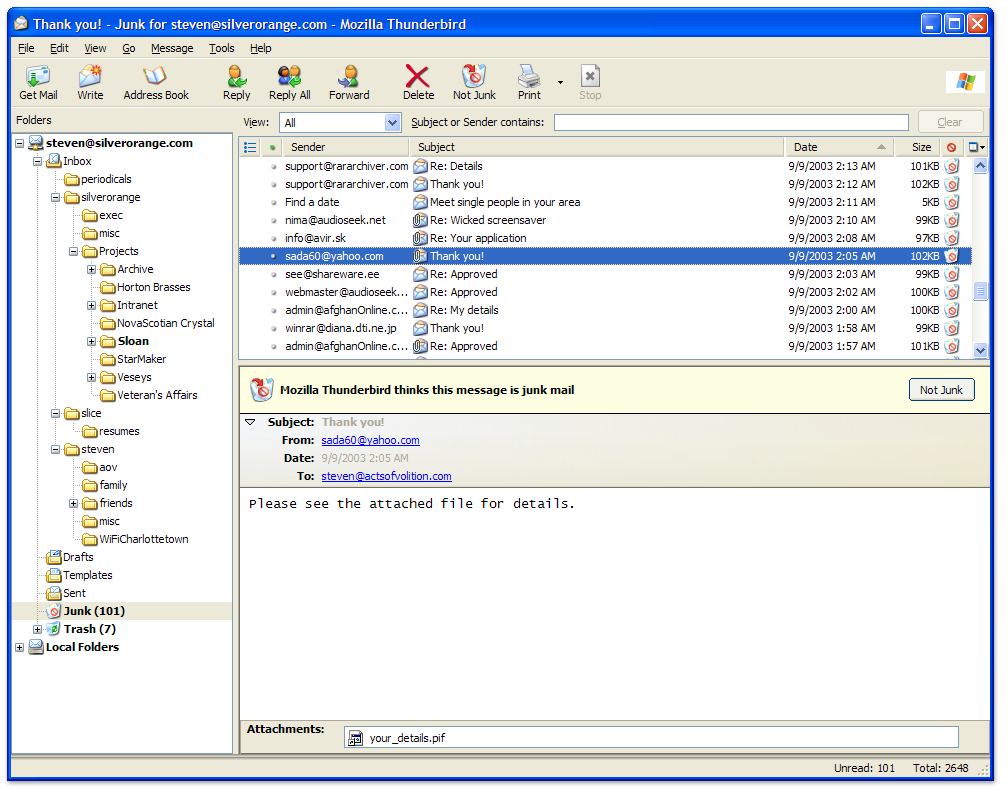
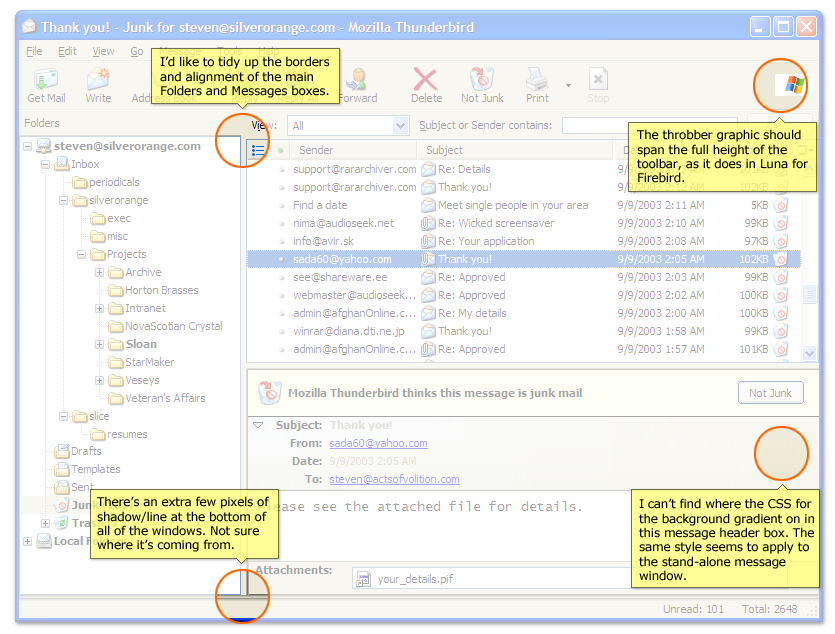
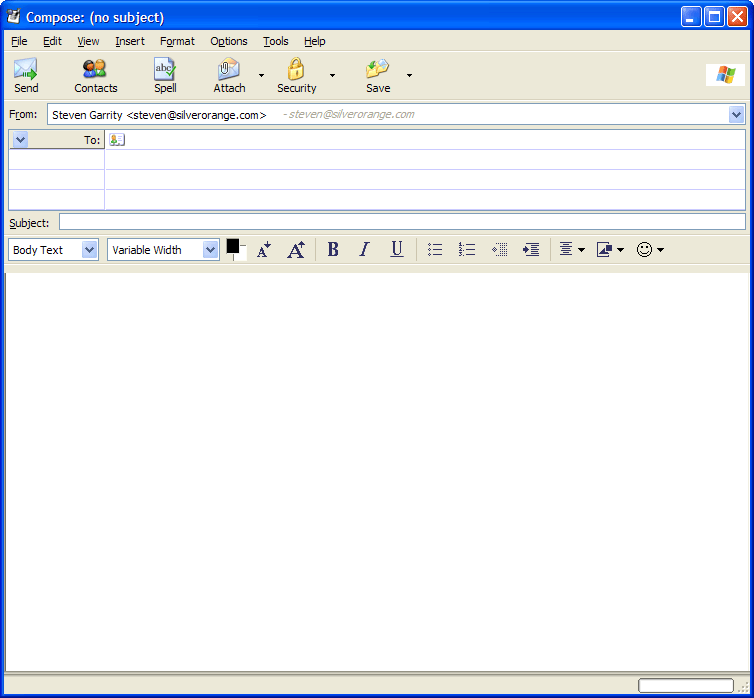
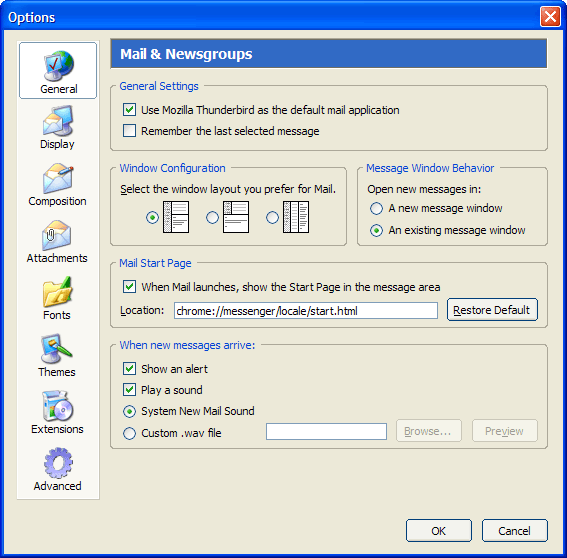
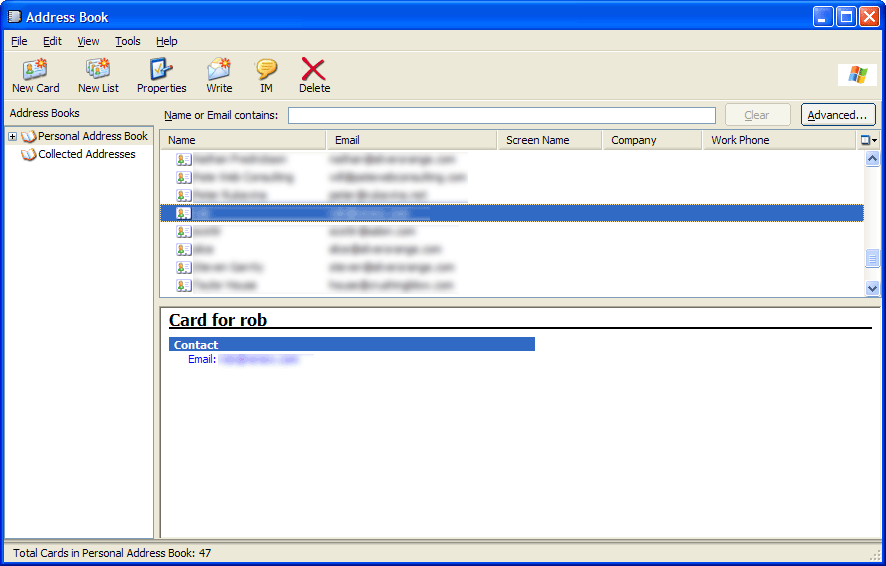
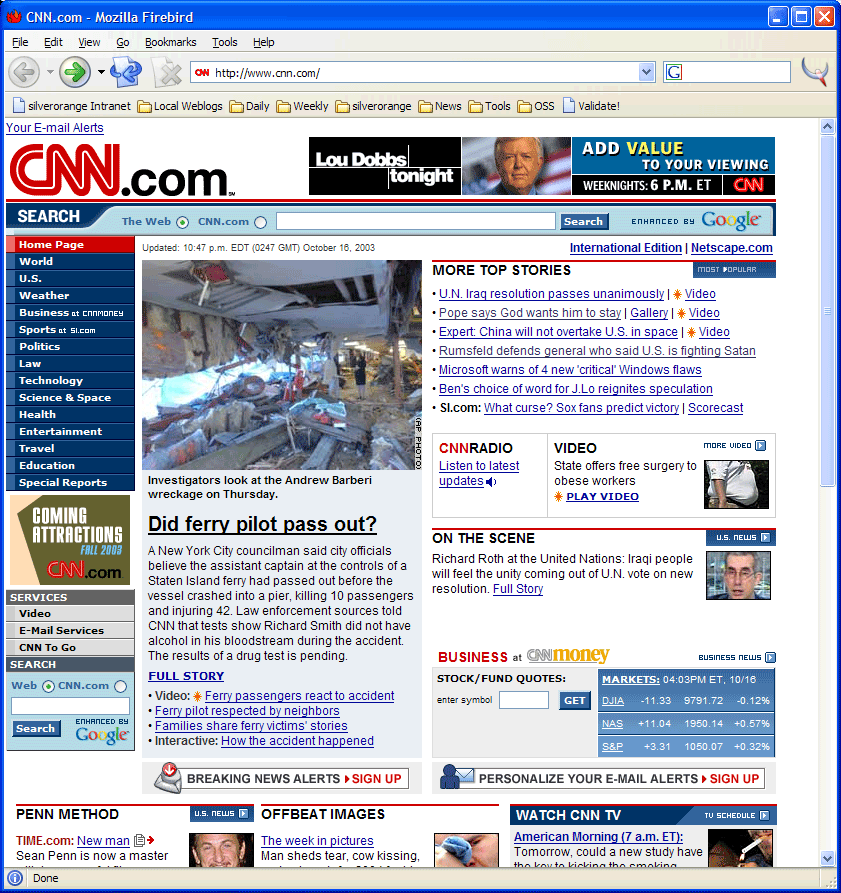
 I’ve been using and enjoying the products of the Mozilla project more and more lately. I’ve been hooked on Mozilla Firebird for a while, and my recent Mozilla Thunderbird theme was my first real contribution (if you could call it that) to the movement.

 Download/Install Luna Blue for Mozilla Thunderbird – Development Version