I love playing video games but haven’t played many since I had kids about a decade ago.
In the past year, I did squeeze in a bit of time and replayed a few old favourites (like an older person who never gets past the music they discovered as a teenager, which is also true for me). I played through the Half-Life series and the StarCraft series. Both were filled with nostalgia and were fun.
I also got in a much newer (by my standards) game, Sayonara Wild Hearts – which I loved.
In addition to having more limited free time, I’ve noticed another change in myself over the last ten years: the idea of simulating shooting other people for fun feels deeply problematic.
What I enjoyed most about these games is the simple sense of progression and accomplishment. I’m not looking for an “open-world” experience where I can do anything – I get enough of that ambiguity in my life. When I’m playing a game, I want to be told what to do, do it, and then get a pat on the back for it.
I’m not sure it’s healthy to seek a sense of accomplishment from video games, but there are worse vices.
After finishing up a nostalgic replay through the campaigns in StarCraft II recently, I turned to a different source for the sense of accomplishment and progression: online web development tutorials.
I’ve come across a lot of talk of “gamification” in my work as a Web designer. I’m automatically skeptical when I come across a new term. I’m especially skeptical about gamification as it was often used as a euphemism for ‘manipulating people into using our thing’. One notable exception is Duolingo, which I see as a positive and effective example of using game-style achievements to help encourage learning a new language (disclosure: I have worked with Duolingo through my job, and they do make money when you use their service).
I’ve found that a simple Web development tutorial seems to hit the same spots in my brain that a good game does. I worked through the NextJS framework tutorial and the RedwoodJS framework tutorial. Each took less than an hour (which I did in 10 or 20 minute blocks with frequent interruptions).
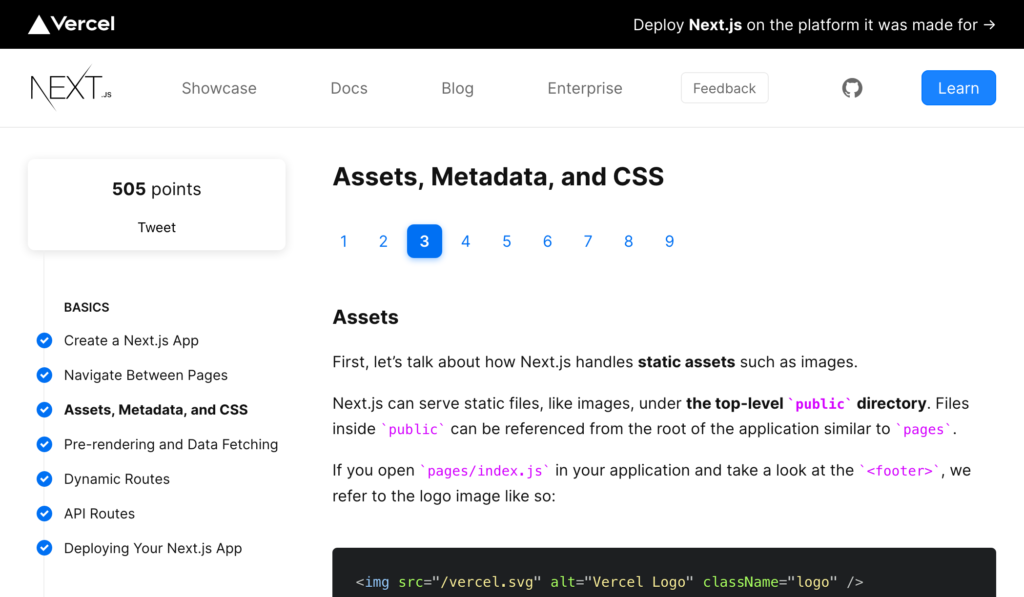
I found the NextJS tutorial particularly well written and designed. It was written at a level that I could handle (my strengths are in HTML/CSS and design, not in JavaScript or other programming languages). It didn’t feel needlessly “gamified”, except for a goofy “points” system they encourage you to tweet about. This was easy to ignore.
What I learned here is that a well-architected learning pathway can be as engaging and rewarding as a great video game. There’s also less simulated violence.